 takoyaki-writer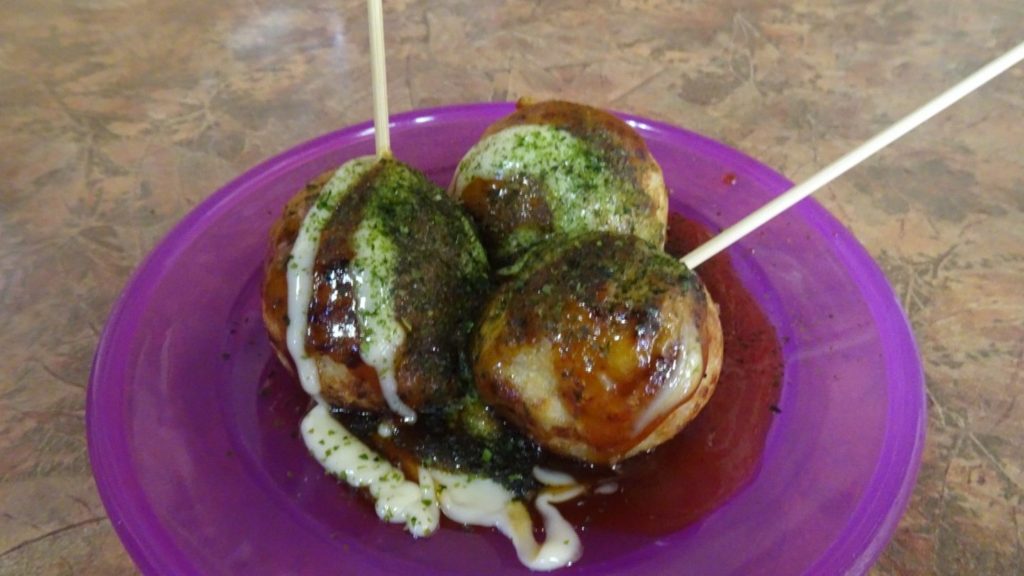
Takoyaki is considered a soul food in Osaka, appreciated for its affordability and accessibility, allowing anyone to enjoy it
Takoyaki is a dish made with eggs, water, and flour. It involves placing octopus into the mixture and cooking it in a round-shaped device. Cooking method, sauce used, and the vegetables included in the batter can vary between different shops, allowing each shop to showcase its unique characteristics.
Takoyaki’s History
Before takoyaki, there were similar dishes that existed, such as “choboyaki”, “Akashiyaki” and “Radiyoyaki”
1 choboyaki
“choboyaki” involves a mixture of water and flour, to which finely chopped konjac, green onions, ginger and tenkasu are added.
During the Taisho era through the early Showa era, “choboyaki” could be enjoyed at Candy Shop and similar places. One significant difference from takoyaki lies in its form: while takoyaki is round and shaped like a ball, choboyaki is cooked in a rectangular shape. Moreover, it was not limited to the Kansai region; it was also consumed in places such as Kumamoto.
2 Akashiyaki
“Akashiyaki” involves creating a batter with eggs, cake flour, broth and water. Only octopus is added to this batter and finally broth is poured over the mixture.
As the name suggests, Akashiyaki is a local dish of Akashi City in Hyogo Prefecture. Its history dates back to the Edo period. In the local area, Akashiyaki is referred to as “Tamagoyaki,” a dish primarily made with eggs. Unlike takoyaki, which is cooked on an iron plate, Akashiyaki is prepared on a copper plate. The use of this copper plate results in a fluffy texture.
3 Radiyoyaki
“Radiyoyaki” involves a batter similar to takoyaki, made with eggs, flour and water but with a soy sauce-based flavor. The distinctive feature is the inclusion of “suji konnyaku” in the batter.
In the year 1933 (Showa 8), Aizuya created a dish that served as the basis for “choboyaki”. The main difference from takoyaki lies in the choice of filling, which can be either octopus or beef tendons. The beef tendons are seasoned with miso and finely chopped konjac also known as “suji konnyaku” or simply “suji kon” is added. “Radiyoyaki” itself has a distinct flavor, and it can be enjoyed without the need for additional sauce. The name “Radiyoyaki” was derived from the radio, as it was named after the radio programs popular at that time.
4 Birth of Takoyaki
In the year 1935 (Showa 10), reviews for Radiyoyaki were not so good. Endo Ryukichi, the founder of Aizuya was selling Radiyoyaki when a customer provided a hint saying “Osaka has meat and Akashi has octopus in it.” Inspired by this, Endo experimented with adding octopus to Radiyoyaki and eventually created “takoyaki.
Takoyaki was born by drawing inspiration from both “Akashiyaki” and “Radiyoyaki”.
Takoyaki was well-received by the public from its initial introduction and gradually became widely known.
Additionally, during its initial sales period, takoyaki was eaten without any sauce. It wasn’t until after the war that a rich sauce was created, and the current style of topping takoyaki with sauce, seaweed flakes, bonito flakes and served on a boat-shaped plate with toothpicks was adopted.
Even today, Aizuya continues to sell the original style of takoyaki without sauce, staying true to its original form.
Summary
We’ve summarized the history of takoyaki this time. There were many easily consumable flour-based dishes even before takoyaki and takoyaki itself is the result of blending these elements.
For those interested in choboyaki, Akashiyaki, or Radiyoyaki, I encourage you to try making them yourself or visit places where they are available./p>
Visiting Aizuya, where you can enjoy the original takoyaki, and trying the first takoyaki they ever made is also highly recommended!